





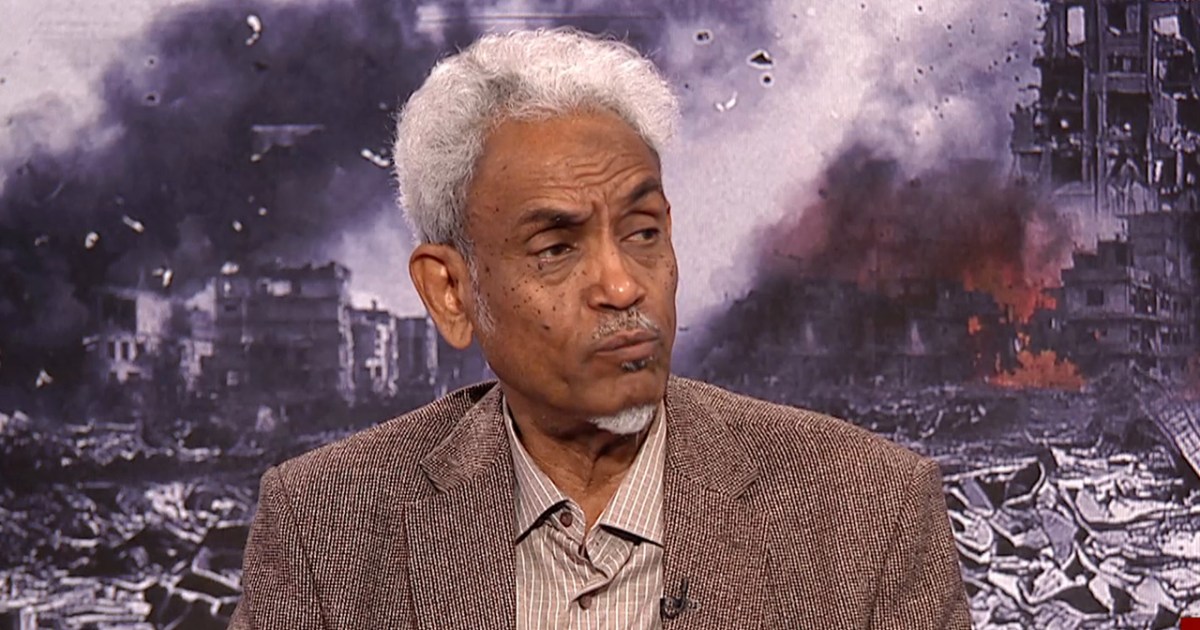
The ongoing conflict in Sudan has sparked intense debate and accusations, with various parties attempting to understand its roots and assign responsibility. A prominent figure in the Islamic movement, Dr. Amin Hassan Omar, recently offered a detailed perspective, vehemently denying any role for the movement in instigating the war and shifting the blame towards the Rapid Support Forces (RSF) and external influences. This article delves into Dr. Omar’s analysis, exploring his arguments regarding the Sudanese army, the RSF, the 2019 events, and the potential path forward for Sudan.
الحرب في السودان: نظرة من قيادي إسلامي حول الأسباب والمسؤولية (The War in Sudan: A View from an Islamic Leader on Causes and Responsibility)
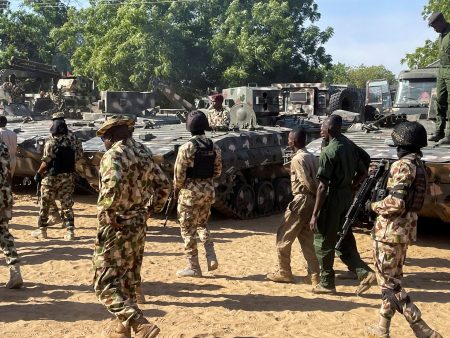
The war in Sudan, now approaching its third year, continues to devastate the nation. Dr. Amin Hassan Omar, a leading figure within the Islamic movement, firmly rejects claims that the movement played any part in igniting the conflict. He argues that these accusations are a deliberate tactic to deflect attention and, in reality, constitute an attack on the Sudanese army itself, falsely labeling it as “Islamic.” He emphasizes that while many soldiers are devout Muslims, this does not equate to the army being an organizationally Islamic entity.
Dr. Omar traces a shift in the army’s culture back to the presidency of Jaafar Nimeiri, who implemented policies like banning alcohol, establishing mosques within military barracks, and adopting an Islamic slogan for the army. He also points to mandatory Islamic education courses for senior officers as contributing factors to this perception. However, he maintains this doesn’t make the army inherently driven by Islamic ideology in a political sense.
دور قوات الدعم السريع في إشعال الصراع (The Role of the Rapid Support Forces in Igniting the Conflict)
Dr. Omar unequivocally places the responsibility for initiating the war on the Rapid Support Forces (RSF). He highlights the fact that the RSF, originating from outside Khartoum, amassed a force of 80,000 fighters within the capital, openly preparing for battle. This, he asserts, is concrete evidence that the RSF were the aggressors, not the army or the Islamic movement. He describes the RSF as a chaotic and dangerous militia, a characterization echoed by international observers.
He also expresses skepticism towards ongoing peace initiatives, describing them as vague and lacking genuine guarantees. Specifically, he criticizes the absence of provisions to halt the flow of weapons and mercenaries into the country, reinforcing his distrust of the RSF’s willingness to negotiate in good faith. The issue of الأمن الإقليمي (regional security) is central to his concerns, as he believes external actors are fueling the conflict.
الحل العسكري كخيار ضروري (The Military Solution as a Necessary Option)
While acknowledging the horrors of war, Dr. Omar defends the option of a military solution as “the lesser of two evils.” He believes that any ceasefire or pause in fighting will inevitably be followed by renewed conflict due to the continued external support for the RSF and the inherent instability of the force itself. He characterizes the RSF as a non-traditional, chaotic, and even terrorist entity.
He explicitly rejects comparisons to the situation in South Sudan, arguing that the context is fundamentally different. Unlike South Sudan, he insists, there is no significant separatist movement within Darfur or Kordofan. Any potential separation, he believes, would be imposed by external forces. He predicts a potential military resolution to the conflict by the end of the year, citing weaknesses within the RSF, including their reliance on mercenaries, internal divisions, and tribal conflicts – particularly those between the Salamat and Beni Halba, and the Ma’alia and Rizeigat tribes.
نظرة على أحداث 2019 وحكم البشير (A Look at the Events of 2019 and Bashir’s Rule)
Dr. Omar offers a critical assessment of the events of 2019, dismissing the popular narrative of a genuine revolution. He argues that the changes were, in fact, a carefully orchestrated coup, both internally and externally driven. He questions the size of the protests, suggesting that the gatherings at the General Command were limited to around 20,000 people. He accuses security committees of betrayal and facilitating the overthrow of the government.
Regarding the creation of the RSF by former President Omar Hassan Ahmed al-Bashir, Dr. Omar defends the decision, stating that establishing non-regular forces is not unprecedented in Sudanese or global history. He argues that the problem lies not in the creation of the RSF, but in the subsequent handling of the force and the army’s resistance to integrating it into the regular military structure.
He also defends Bashir’s 30-year rule, citing economic figures showing a significant increase in GDP from 17 billion in 1989 to 127 billion according to the World Bank. While acknowledging economic mismanagement in later years, he refuses to condemn the entire period as a failure, believing that every leader has both positive and negative aspects to their legacy. He emphasizes the importance of المحاسبة القضائية (judicial accountability) for individuals, rather than blanket political condemnation.
مستقبل السودان والحوار الوطني (The Future of Sudan and National Dialogue)
Despite the current turmoil, Dr. Omar expresses optimism about Sudan’s future. He believes the country is engaged in a “battle for liberation” and will ultimately prevail with minimal losses. He points to improving conditions on the ground for the army and the Sudanese people, as well as a more favorable regional environment. He anticipates victory through the combined efforts of the army, popular resistance, and joint forces.
He states his willingness to engage in dialogue with all Sudanese factions, without excluding anyone. However, he strongly rejects preconditions set by other parties, such as the demand for an apology for the “Salvation” government, deeming it unreasonable to require a confession of guilt before even beginning discussions. He believes a genuine dialogue requires open minds and a willingness to understand different perspectives, focusing on الوطنية (nationalism) and the best interests of Sudan.
In conclusion, Dr. Amin Hassan Omar presents a robust defense of the Sudanese army and a scathing critique of the RSF, attributing the ongoing conflict to the latter’s aggression and external interference. His perspective offers a valuable, though controversial, insight into the complex dynamics shaping the future of Sudan, emphasizing the need for a strong military response and a national dialogue based on accountability and genuine reconciliation. The path forward remains uncertain, but Dr. Omar’s unwavering belief in Sudan’s eventual triumph provides a glimmer of hope amidst the devastation.