







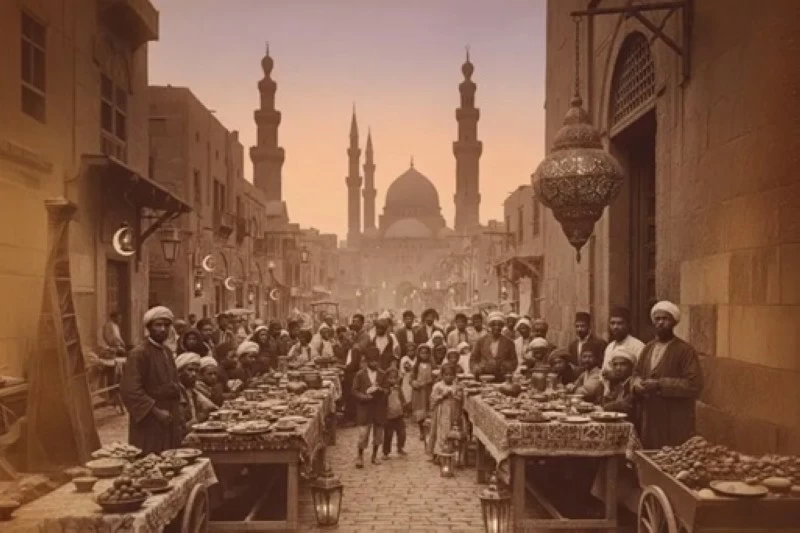
Centuries ago, the magic of رمضان في مصر (Ramadan in Egypt) captivated the hearts of travelers from across the globe. From the meticulous observations of renowned Islamic scholars like Ibn Battuta and Ibn Jubair, to the awestruck accounts of European visitors such as Father Felix Fabri, the vibrant nights of the holy month in Egypt were a spectacle unlike any other. These accounts paint a vivid picture of a city transformed – illuminated by countless lights, bustling with activity, and overflowing with generosity. This article delves into the historical tapestry of Ramadan celebrations in Egypt, exploring the traditions that enchanted generations of observers.
سحر رمضان القديم في مصر (The Charm of Old Ramadan in Egypt)
The descriptions left by these early travelers are remarkably consistent. Fabri, writing in the 15th century, vividly recalled his first night in Cairo, describing a city shimmering with the glow of torches and lanterns. Bernard von Breidenbach, another European traveler, noted the presence of the musaharati – a figure central to the Ramadan experience – making their rounds through the narrow streets, awakening people for suhoor (the pre-dawn meal). These observations highlight a key element of Egyptian Ramadan: its deeply ingrained social fabric and communal spirit.
دور المسحراتي (The Role of the Musaharati)
The musaharati wasn’t merely a wake-up call; they were a vital link within the community. Equipped with a drum, they would walk the neighborhoods, calling out the names of residents as they passed each home, ensuring everyone had the opportunity to partake in suhoor. In Alexandria, the tradition involved knocking on doors and announcing the time to rise. This practice wasn’t just about practicality; it fostered a sense of togetherness and shared observance, solidifying the musaharati’s place as a beloved symbol of رمضان في مصر.
كرم الضيافة والعطاء في رمضان (Generosity and Giving During Ramadan)
Beyond the rituals, the generosity displayed during Ramadan in ancient Egypt was particularly striking. It wasn’t limited to any single social class. Egyptians were known for their willingness to share food and sweets with the less fortunate, with thousands of dishes distributed in mosques and public spaces. Historical accounts reveal the extent of this generosity. Sultan Al-Zahir Baybars, for example, established large kitchens to prepare iftar (the fast-breaking meal) for five thousand people daily. Wealthy individuals followed suit, distributing meat and nuts to the populace.
حتى العبيد لم ينسوا (Even the Slaves Were Not Forgotten)
Remarkably, even enslaved individuals benefited from the spirit of Ramadan. Some sultans would grant freedom to dozens of slaves during the holy month, while others hosted lavish feasts extending for hundreds of meters, welcoming thousands of guests. This demonstrates a widespread commitment to compassion and charity that permeated all levels of Egyptian society during رمضان في مصر.
ليالي رمضان المضيئة (The Bright Nights of Ramadan)
As the sun set, Cairo transformed. Alleys and squares came alive with light, as people gathered around iftar tables laden with traditional delicacies like k’aak (a type of biscuit) and various nuts. Refreshing drinks, such as rose or orange flavored beverages, were also enjoyed. Following Taraweeh prayers, groups of Quran reciters and singers would move through the mosques, filling the air with melodious verses and religious hymns.
The atmosphere wasn’t solely religious. Travelers observed that both the wealthy and the common people would rest during the day to conserve energy for the vibrant nighttime activities. Markets buzzed with activity, offering a variety of goods and entertainment, including traditional shadow puppet shows (khayal al-zil) and the comedic performances of aragoz. This blend of piety and entertainment created a unique and captivating atmosphere.
شهادات الرحالة عن رمضان (Travelers’ Testimonies About Ramadan)
Scholars and travelers like Edward William Lane and Richard Burton meticulously documented the details of Ramadan in Egypt. They recorded everything from the sighting of the new moon to the sound of the cannon announcing iftar, and the lively atmosphere in cafes where poets recited verses and storytellers shared folk tales. These detailed observations provide invaluable insights into the cultural richness of رمضان في مصر and its enduring traditions. The أجواء رمضان (Ramadan atmosphere) was, and remains, a vibrant tapestry woven with faith, generosity, and community.
In conclusion, رمضان في مصر has always been, and continues to be, a holistic celebration encompassing the body, spirit, and community. From the musaharati’s rhythmic drumming to the bountiful iftar tables, the radiant lanterns, and the soulful Quran recitations, every element contributes to a city that comes alive during the holy month. It’s a time when traditions are honored, connections are strengthened, and the spirit of generosity shines brightly, making Ramadan in Egypt a truly unforgettable experience. Share your own Ramadan memories in the comments below!