






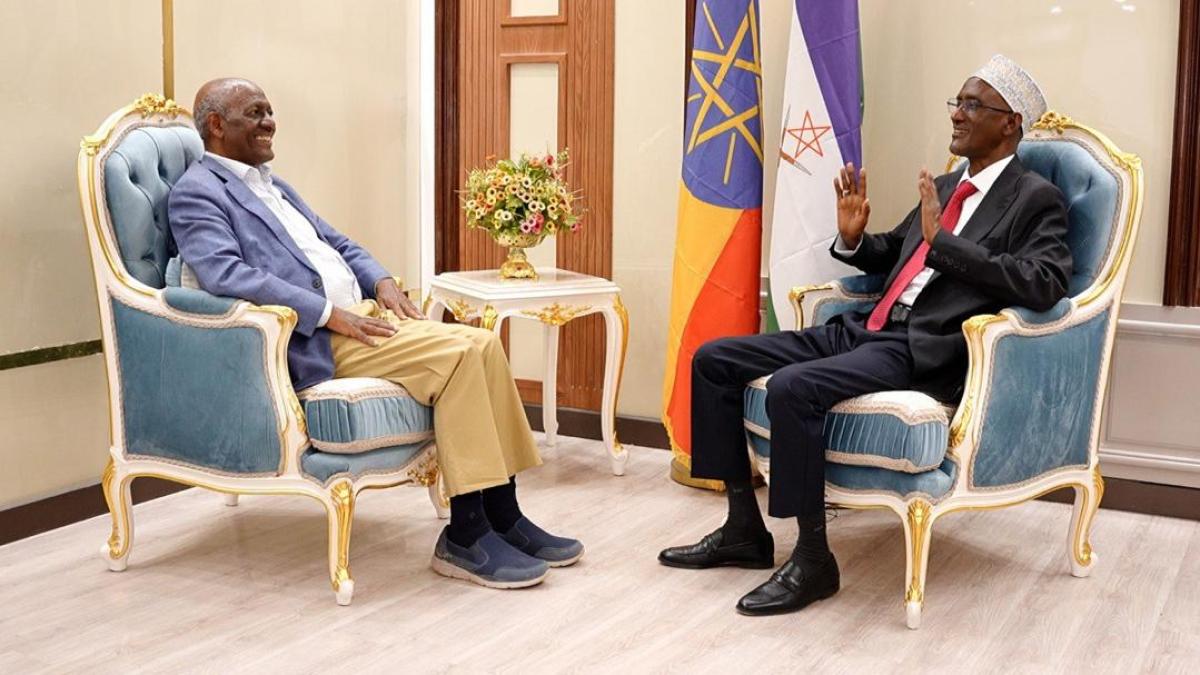
The recent volcanic eruption near Ertale Ali in Ethiopia’s Afar region has captured global attention, sparking scientific inquiry and raising concerns among neighboring communities. This unprecedented event, as described by Afar region Governor, Awol Arta, marks the most significant volcanic activity in the area in over 12,000 years and underscores the geological dynamism of the Afar region. Understanding the implications of this eruption—environmentally, economically, and socially—is crucial, and this article will delve into the details, response efforts, and future opportunities for this strategically important part of East Africa.
The Ertale Ali Eruption: A Geological Anomaly
The eruption, centered in the Hayli Gobi area, surprised even seasoned observers of the active volcanic system surrounding Ertale Ali. While the volcano is accustomed to annual, varied eruptions, the current event is distinct in its scale and location. Governor Arta emphasized that the eruption didn’t occur within the traditional craters, but instead initiated from a new fissure approximately 10 kilometers away, creating multiple new vents.
This geological shift suggests a significant change in the underlying magmatic system. The governor rightly pointed out that the event is no longer solely a local or national concern, but requires broader international cooperation for study and mitigation of potential future impacts. The region’s geological complexity and unique position within the East African Rift System necessitate detailed investigation to better understand the forces at play and accurately predict future activity. The resulting data will be vital for regional disaster preparedness.
Immediate Impacts and Emergency Response
Fortunately, the eruption has not resulted in direct human casualties. However, significant environmental and socioeconomic consequences are being felt across the Afar region and beyond. The governor described damage to livestock and vegetation, compounded by air and water pollution. The spread of these effects to neighboring regions and countries is facilitated by prevailing wind patterns.
To address the situation, a state of emergency committee has been established, bringing together the Disaster Risk Management Commission, the Ministry of Health, and the universities of Semera and Addis Ababa. This committee is tasked with monitoring the eruption, assessing its scientific and humanitarian impacts, and coordinating relief efforts. Initial assessments show a need for resources to support affected communities and rehabilitate damaged ecosystems. Addressing the psychological impact on residents is also a priority, as displacement and uncertainty can lead to long-term mental health challenges.
Dispelling Misconceptions: The GERD and the Volcano
In the wake of the eruption, unfounded claims linking it to the Grand Ethiopian Renaissance Dam (GERD) have surfaced. Governor Awol Arta firmly dismissed these allegations, clarifying that the volcano’s location in the northeastern part of the country is geographically distant from the dam’s construction site. He stressed that associating the two events lacks any scientific basis and is purely speculative. It is important to address these types of misinformations with scientific evidence.
Regional Stability and Cross-Border Relations in the Afar Region
The Afar region’s stability is interwoven with its relationship with surrounding areas. Governor Arta highlighted the established peace and cooperation with the Oromo and Amhara communities, and the recently achieved understanding with the Somali region through mediation by the federal government. However, relations with Tigray have been strained due to past conflicts. A key focus now is reconstruction and recovery following substantial losses incurred from both the war and the natural disaster.
The relationship with Djibouti is described as strong, built on mutual peace and shared interests. The border with Eritrea, however, is subject to fluctuations, opening during peaceful periods and closing during times of tension. Governor Arta underscored a fundamental truth: the Afar people, spanning Ethiopia, Eritrea, and Djibouti, are one people with a shared destiny, transcending the artificial boundaries imposed by colonial history. This shared identity presents a unique opportunity for fostering cross-border cooperation and integrated development initiatives.
Investment Opportunities and Economic Potential of the Afar Region
The Afar region is rich in natural resources, offering significant investment opportunities. Governor Arta appealed to investors from the Gulf region and beyond to capitalize on the vast potential. The region boasts substantial deposits of gold, copper, and rare earth minerals, alongside extensive arable land and significant livestock resources.
Furthermore, the course of the Awash River through five administrative zones, coupled with the presence of freshwater lakes and “Lake Asale” (a salt lake), provides strategic advantages, particularly concerning proximity to the Red Sea. The government is prepared to incentivize investment through tax exemptions, land provisions, and investment protection measures. Recognizing the Afar region as a land of opportunity, the administration actively courts projects in agriculture, mining, energy, and manufacturing. Sustainability is also being incorporated into new projects.
The Afar Identity: A Bridge Across Borders
The Afar people maintain a strong cultural identity and established connections that transcend national borders, inhabiting areas within Ethiopia, Eritrea, and Djibouti. Even amidst political tensions, Afar communities have preserved their natural interactions and played a vital role as a bridge between these nations. As cooperation between these three countries strengthens, the Afar areas can become a model for economic integration and sustainable development in the Horn of Africa. Implementing initiatives tailored to the unique needs and strengths of the Afar people will be essential for achieving this vision. Considering the unique cultural landscape of the area will also further facilitate investment.
In conclusion, the volcanic eruption near Ertale Ali is a major event with far-reaching consequences. The effective response and long-term recovery will depend on sustained scientific monitoring, swift humanitarian assistance, and a commitment to regional collaboration. The Afar region, despite the challenges, possesses enormous potential for economic development and can serve as a catalyst for stability and prosperity in the Horn of Africa, provided investment and cooperation are prioritized. Further research and collaborative efforts are key to unlocking the region’s full potential and ensuring a resilient future for its people.