




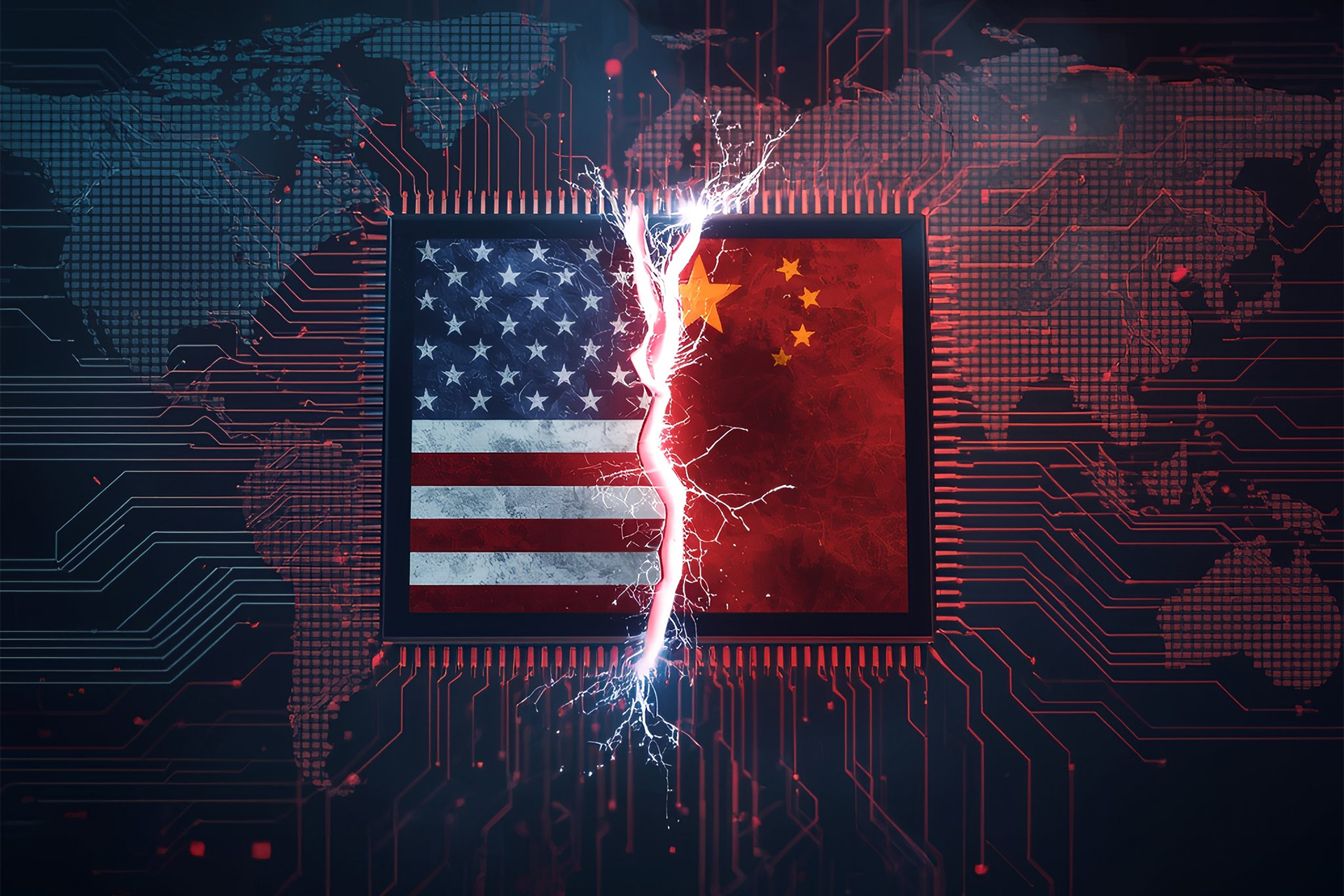
The world is witnessing an unprecedented technological race, one where dominance in Artificial Intelligence (AI) is seen as the key to global power. This competition, particularly acute between the United States and China, is reshaping geopolitical landscapes and has significant ramifications for countries in the Arab region. This article delves into the escalating “GPU war” – the struggle for control over graphics processing units, the essential hardware powering AI – and its potential impact on the technological future of the Arab world.
مستقبل الهيمنة التكنولوجية: نظرة عامة على السباق العالمي
In 2017, Russian President Vladimir Putin delivered a striking message to over a million students: the nation that leads in AI will rule the world. This wasn’t simply rhetoric, but a clear acknowledgement of the pivotal role AI would play in the 21st century. Today, that prediction rings true. AI is a primary driver of the global economy and a crucial element in national security strategies. The recent World Economic Forum in Davos underscored the importance of innovation and modern technology, with discussions revealing a consensus amongst US tech giants to bolster domestic data center infrastructure and maintain flexible AI regulations to combat Chinese advances.
ظهور DeepSeek وصدمة الأسواق
However, this carefully laid plan faced an unexpected disruption. In January 2025, a relatively unknown Chinese startup, DeepSeek, launched its open-source large language model (LLM) – R1. R1 not only rivaled but, in some cases, outperformed prominent American models like ChatGPT. This breakthrough sent shockwaves through the global tech community.
DeepSeek’s success stemmed from its lower cost and smaller model size compared to OpenAI’s systems. The rapid adoption of the model triggered a massive sell-off in global markets, resulting in over a trillion dollars in losses for US and European tech stocks. NVIDIA, a key player in the development of GPUs, was particularly hard hit, losing approximately $589 billion in market value in a single day – a record for the US stock market. This event clearly demonstrated that the السباق نحو الهيمنة التكنولوجية wasn’t confined to strategic planning; it was unfolding with tangible and dramatic economic consequences.
استراتيجية “Star Gate” والقيود الأمريكية على التصدير
Responding to the challenge, the US, under a renewed Trump administration, unveiled the “Star Gate Project,” a strategic initiative aimed at preserving American technological supremacy. The name itself evokes the “Star Wars Strategy” of the Reagan era, which focused on technological competition with the Soviet Union. The core of this strategy, like its predecessor, centers on maintaining a competitive edge, but now the battlefield is ‘techno-politics’ – a realm where power is projected through technological superiority.
The US implemented stringent export controls on advanced computing chips, particularly GPUs (وحدات معالجة الرسومات), and semiconductors to China. These regulations categorized countries into tiers, granting unrestricted access to technology to some, limited access to others, and a complete embargo to nations like China, Russia, Iran, and North Korea. The intent is clear: control the global development of AI and solidify US dominance over the crucial supply chain of these essential components.
دور DeepSeek في تغيير قواعد اللعبة
DeepSeek, founded by Liang Wenfeng, cleverly circumvented these limitations. The company employed an entirely Chinese workforce and chose to release its models as open source – a deliberate attempt to break the monopoly held by larger corporations. They also leveraged what appeared to be a strategic stockpile of NVIDIA chips secured by Wenfeng prior to the tightening of restrictions.
NVIDIA attempted to navigate the restrictions by developing the H800 chip specifically for the Chinese market, slightly reducing interconnect bandwidth whilst maintaining performance. This provided a foundation for DeepSeek’s success. This highlights a key point: restricting access to advanced technology doesn’t necessarily halt innovation, but rather encourages alternative pathways and local development. The emergence of DeepSeek underscores the importance of diversifying technology sources, a concept gaining traction in the context of الأمن التكنولوجي (technological security).
تداعيات السباق التكنولوجي على الدول العربية
By 2024, NVIDIA had risen to become the third-largest company globally, highlighting the increasingly critical role of chips – often referred to as the “new oil.” This realization has prompted several Arab nations, particularly in the Gulf region, to accelerate their investments in AI and digitalization, aiming to diversify their economies. Saudi Arabia, the UAE, and Qatar have all developed national strategies, albeit to varying degrees.
However, these nations’ growing collaboration with China now places their AI projects at the heart of the US-China conflict. The tightening of American export controls on chips to the region is causing delays and even rejections of requests from Arab companies seeking advanced GPUs from NVIDIA, Intel, and AMD. Denying a nation access to advanced processing units directly hinders the development of its AI systems and compromises its competitive edge. This has the potential to create a dangerous technological dependency.
نحو استقلالية تكنولوجية عربية
The الذكاء الاصطناعي (Artificial Intelligence) competition is not merely about economic or technological power. It is a fundamentally geopolitical struggle with lasting implications. While legislation, similar to the European Union’s AI Act, can provide a framework, it is insufficient on its own. Countries in the Arab region must strive for greater technological independence, building an ecosystem capable of generating its own knowledge and technology. The Chinese experience demonstrates that such a transformation is achievable.
The future geopolitical landscape will undoubtedly be shaped by this technological rivalry. Developing a degree of technological self-sufficiency is essential for preserving sovereignty in a world increasingly defined by algorithms and technological prowess.
Disclaimer: The views expressed in this article do not necessarily reflect the editorial position of Al Jazeera Network.