



The situation in Syria remains volatile, with recent escalations in the eastern Euphrates region drawing international attention. The Syrian army’s advance into the city of Tabqa and the encirclement of Kurdish forces around a military airport mark a significant turning point, threatening to unravel a fragile agreement aimed at integrating Kurdish-led forces into the Syrian state. This article delves into the complexities of the current conflict, the political maneuvering, and the future of influence in eastern Euphrates.
تصاعد القتال وتصعيد الموقف (Escalating Conflict and Rising Tensions)
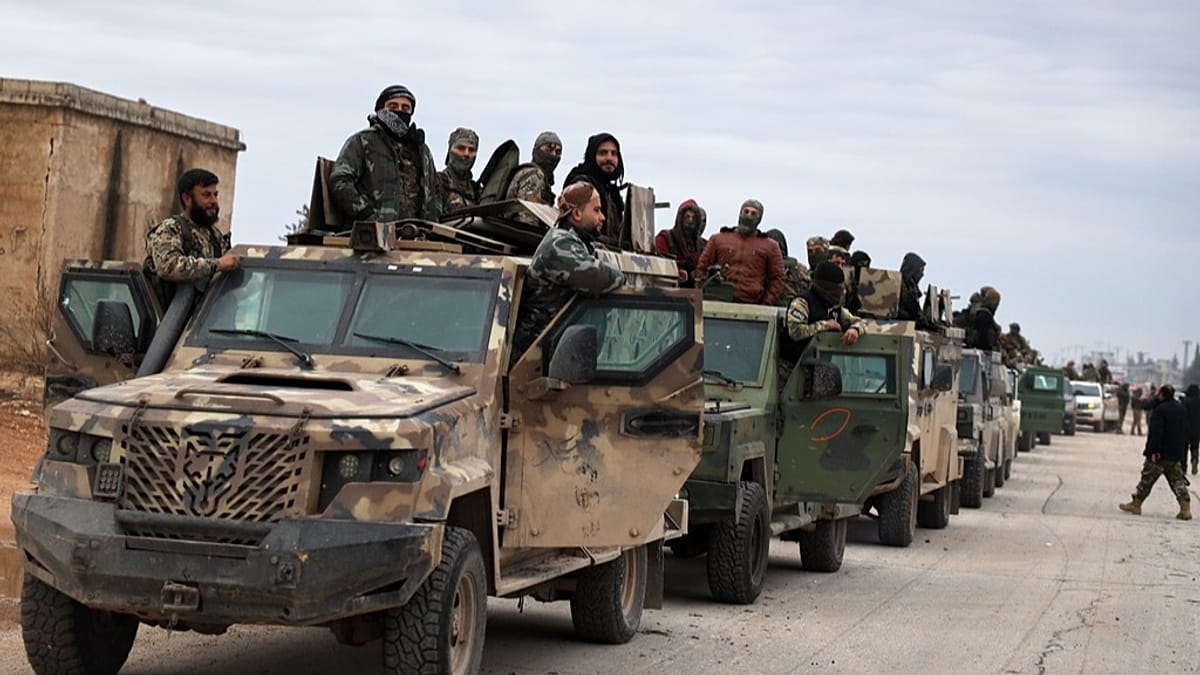
Recent hours have witnessed a sharp increase in clashes as the Syrian army announced the commencement of its entry into Tabqa, simultaneously tightening its grip on Kurdish forces stationed near a military airport. This development follows a series of sporadic skirmishes and an expansion of fighting in the western countryside of Raqqa. “Syrian Democratic Forces” (SDF) reported continuous artillery and missile shelling of the area, alongside fierce clashes on the Dabsi Afnan and Rasafa axes.
The commander of the SDF, Mazloum Abdi, announced on Friday the decision to withdraw his forces from the contact lines in the eastern countryside of Aleppo, with the withdrawal scheduled to begin on Saturday. He explained that this step was taken in response to calls from friendly countries and mediators, and as a gesture of goodwill to facilitate the integration process with the Syrian authorities.
However, this path towards integration has been marred by escalating tensions. The Syrian army accused the SDF of violating the agreed-upon terms by targeting its patrols near the city of Maskana, resulting in the deaths of two soldiers and injuries to others, according to the Syrian Arab News Agency (SANA). SANA later reported the deaths of two more soldiers in an attack by suicide drones on the town of Dabsi Afnan, west of Raqqa, blaming groups affiliated with the Kurdistan Workers’ Party (PKK).
انسحاب القوات وتهميش الاتفاق (Withdrawal of Forces and Marginalization of the Agreement)
In response, the SDF stated that the clashes in Dabsi Afnan erupted after the Syrian army launched an attack on their positions, considering this a clear violation of the internationally-sponsored ceasefire agreement. This agreement stipulated a 48-hour period for the withdrawal of SDF fighters from Deir Hafer and Maskana. Following these developments, the SDF announced a complete curfew in Raqqa province, effective Saturday until further notice.
The Syrian army, in a statement broadcast on state television, declared “establishing control over 34 villages and towns in the eastern countryside of Aleppo,” including Deir Hafer and Maskana, as well as a military airport. They demanded the complete withdrawal of SDF forces to the east of the Euphrates River. Syrian authorities also announced regaining control of two oil fields in the north of the country previously held by Kurdish forces.
اجتماع أربيل والمساعي السياسية (The Erbil Meeting and Political Efforts)
Amidst this escalation, a political track emerged with a meeting held today in Erbil, the capital of the Kurdistan Region of Iraq. The meeting brought together the US envoy to Syria, Tom Brack, the commander of the SDF, Mazloum Abdi, and the leader of the Kurdistan Democratic Party, Masoud Barzani.
A statement issued after the meeting indicated discussions on the situation in Syria and the latest field developments, emphasizing that resolving problems should be based on dialogue, understanding, and peaceful means. Barzani expressed his gratitude to the United States for its role in helping the Syrian parties reach political solutions.
These developments follow an agreement signed on March 10, 2025, outlining the integration of civil and military institutions in northeastern Syria into the state administration. This agreement forms the political framework for the current conflict between military escalation and attempts to recalibrate the situation through negotiation.
من يحسم شرق الفرات؟ (Who Will Determine the Fate of Eastern Euphrates?)
Given the rapidly evolving situation on the ground, the scene in eastern Euphrates is shifting from military clashes to a broader question of political and military influence: who possesses the ability to impose a sustainable equation tomorrow? Eastern Euphrates is not merely a military confrontation zone, but a nexus of international and regional interests, where the calculations of Damascus and Ankara intersect, alongside the SDF’s commitment to its geographical depth, and the continued presence of the United States as a crucial balancing factor.
For years, the United States has built a long-term partnership with the SDF as part of the war against ISIS. This alliance enabled the SDF to establish control over vast areas of northern and eastern Syria. This partnership, which led to the defeat of the organization in its last strongholds in 2019, was not only security-related but also transformed into a pillar of direct American influence in one of the most sensitive regions of Syrian geography.
التحديات الجيوسياسية والمصالح المتضاربة (Geopolitical Challenges and Conflicting Interests)
However, this partnership has always carried geopolitical complexities, primarily concerning Turkey. Ankara views the SDF as an extension of the PKK and considers its armed presence on its borders a direct threat to its national security. With the potential fall of the Assad regime and the rise of a new authority in Damascus with clear Turkish support, Kurdish units have become among the parties fearing being the biggest losers in the reshaping of the Syrian landscape.
The importance of eastern Euphrates lies in its possession of the largest portion of Syria’s oil and gas reserves, in addition to strategic agricultural plains for wheat and cotton production, and its role as a vital water reservoir. Control over this geography means possessing significant economic and political leverage in the future of Syria, which explains the intensification of the conflict over it. The region’s resources are a key factor in the ongoing power struggle.
The question now extends to the future of the SDF’s military and political structure itself: can these forces withstand the new authority in Damascus’s efforts to unify all armed forces within a single army? Will eastern Euphrates be their last refuge, or will it be a harsh settlement arena forcing them to redefine their role?
مستقبل المنطقة والتدخلات الخارجية (The Future of the Region and External Interventions)
The Syrian army’s military advance around Raqqa and Tabqa also raises additional questions: will this advance open the door for Damascus forces to enter deeper into eastern Euphrates? Or is it part of negotiating pressure to improve the terms of political and military integration? Conversely, to what extent can Turkey, which effectively controls most of western Euphrates, push towards expansion eastward, given its support for the new regime in Damascus?
The American factor re-emerges here. The Wall Street Journal reported that US officials have warned that any large-scale military campaign against the US-backed Kurdish forces could undermine regional stability and negatively impact efforts to combat ISIS. This position reflects Washington’s concern that an uncontrolled military push could create a security vacuum that the organization might exploit, the pretext the United States continues to use to justify its military presence in eastern Euphrates.
Republican Congressman Lindsey Graham, a close associate of Trump, warned that if the new Syrian government resorts to military action against Syrian Kurds and the SDF, it could plunge Syria and the region into a new phase of instability. He stated that any such military move would, in his opinion, be a crucial test of the nature of the regime in Damascus. He added that expanding military operations against the SDF would prompt him to work to reactivate and tighten the sanctions of the “Caesar Act.” This raises the question of whether Damascus’s military expansion in eastern Euphrates could reopen the door to the use of American sanctions as a tool of political pressure and punishment.
In conclusion, eastern Euphrates today stands at a critical crossroads. Will it move towards complete reintegration into a central authority supported by Turkey? Or will it remain a zone of influence for the SDF under the American umbrella? Or is the region heading towards a gray formula, which does not amount to formal division, but keeps the lines of influence open to postponed conflicts? The coming weeks will be crucial in determining the fate of this strategically important region.