


The Algerian-Qatari agricultural project represents a significant leap towards bolstering food security and fostering economic collaboration. This ambitious undertaking, poised to become the world’s largest integrated dairy and milk powder production facility, is attracting considerable attention. With an estimated investment of $3.5 billion, the project, a partnership between Qatar’s “Baladna” and Algeria’s National Investment Fund, is strategically designed to yield mutual benefits, primarily through enhanced food security and broadened investment horizons for both nations. The initial phase, launched in September 2024, anticipates production commencement by 2026, marking a pivotal moment in Algeria’s agricultural landscape.
مشروع بلدنا في الجزائر: تحول زراعي واقتصادي واعد (Baladna Project in Algeria: A Promising Agricultural and Economic Transformation)
This project isn’t merely about building a farm; it’s a comprehensive agricultural and industrial ecosystem. The scale of the investment – $3.5 billion – positions it as the largest of its kind globally and a groundbreaking achievement for Algeria. “Baladna”, holding a 51% stake, brings its renowned expertise in dairy farming and processing, while Algeria, through the National Investment Fund (49%), provides the land and infrastructure support. This strategic partnership is set to redefine Algeria’s capacity for local dairy production and significantly reduce its reliance on imports.
تفاصيل المشروع وموقعه الاستراتيجي (Project Details and Strategic Location)
The integrated complex will span a massive 117,000 hectares in the Adrar province of southwestern Algeria. This area is segmented into three principal components, each designed to function symbiotically:
- A dedicated farm for cultivating grains and fodder.
- A state-of-the-art dairy cattle farm for milk and meat production.
- A cutting-edge facility for the production of milk powder and its derivatives.
The project will unfold in four phases. The initial phase, targeted for 2026, involves reclaiming approximately 100,000 hectares, establishing 700 pivot irrigation units for fodder cultivation, constructing two dairy farms, and building one of the two planned milk powder factories. The ultimate goal is to achieve an annual production capacity of around 194,000 tons of milk powder. Driving this vision is a planned herd size that will reach 270,000 cows by year nine of the project, yielding approximately 1.7 billion liters of milk annually.
استيراد سلالات الأبقار وتطبيق أحدث التقنيات (Importing Cattle Breeds and Implementing the Latest Technologies)
Starting in 2026, the project will initiate milk production by importing meticulously selected cattle breeds renowned for their high productivity and adaptability to the local climate. This focus on superior genetics is critical to maximizing yield and ensuring long-term sustainability. Beyond the cattle, the project will leverage advanced technologies, including modern farming practices, a sophisticated system for herd health management, and a high-efficiency milk powder production process, incorporating a 40-meter tall drying unit. The project prioritizes sustainable agriculture by incorporating water-efficient irrigation technologies designed and provided by Valmont, an American company specializing in advanced irrigation systems.
شراكات دولية لتعزيز القدرات الإنتاجية (International Partnerships to Enhance Production Capabilities)
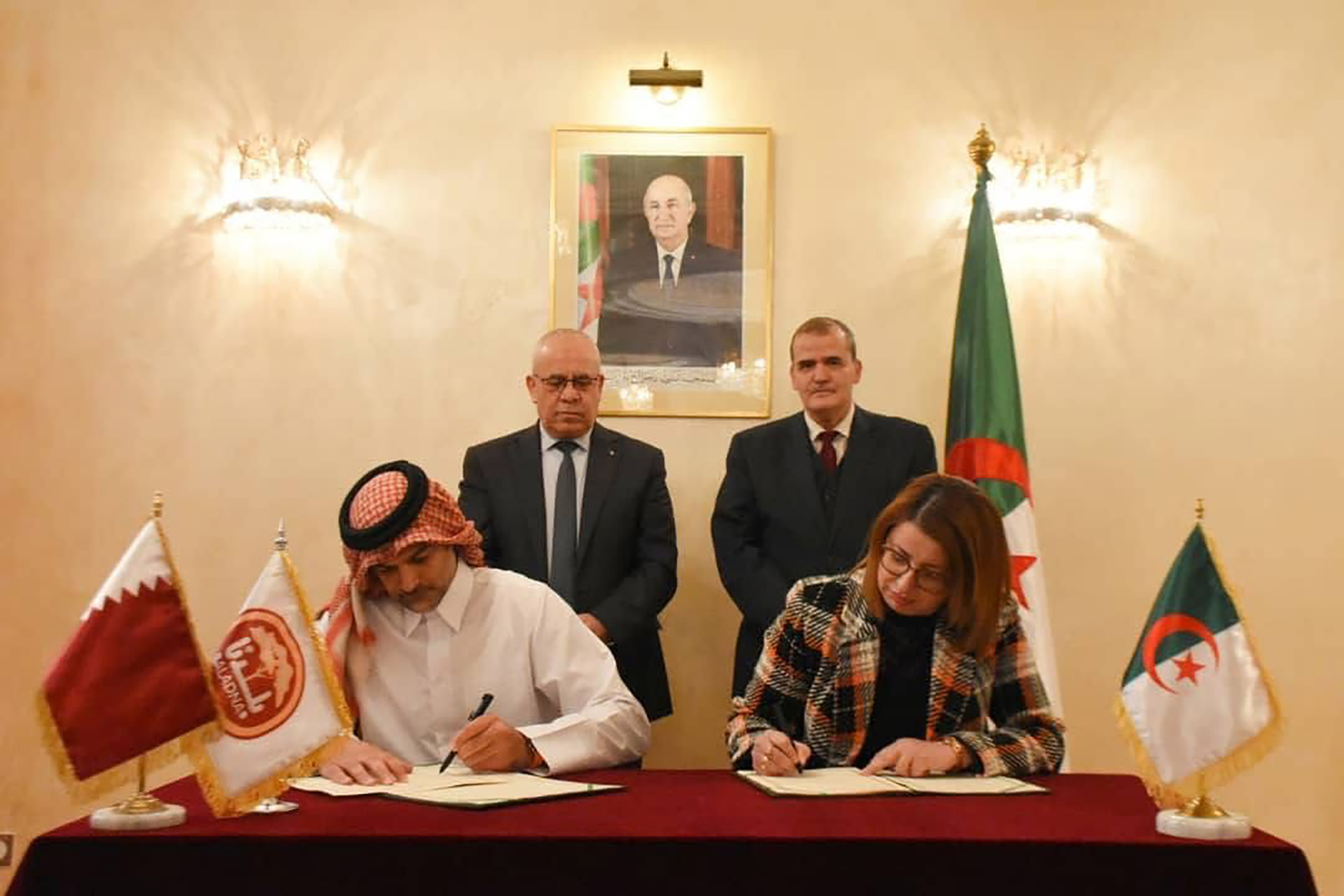
In July of the previous year, several international companies, specialists in their respective fields, joined the project to contribute their technical and technological expertise and bolster its production capacity. Agreements exceeding $500 million were signed in Algiers between “Baladna Algeria” and a consortium of suppliers and consultants.
Key international collaborators include:
- GEA Germany, a leader in dairy processing and automation, responsible for the design of the milk powder factory and dairy farms.
- Valmont (USA) specializing in irrigation networks to rationalize water consumption.
- UCC and EHAF, providing construction and engineering consultancy expertise.
- And several prominent Algerian companies, such as Condor Travocovia, RedMed, and Eforhyd, contributing to infrastructure, construction, and well drilling.
These investments underscore the project’s commitment to leveraging global best practices and promoting local content.
العوائد الاقتصادية المتوقعة للجزائر وقطر (Expected Economic Returns for Algeria and Qatar)
The “Baladna Algeria” project is projected to deliver substantial economic benefits to both countries. For Algeria, the primary objectives include:
- Meeting 50% of the nation’s demand for milk powder locally.
- Increasing the availability of red meat in the Algerian market.
- Creating approximately 5,000 direct and indirect employment opportunities.
According to Algerian economic expert Houari Tigersi, the project will significantly reduce Algeria’s costly milk powder import bill, protecting its foreign exchange reserves. Furthermore, it will create jobs across the agricultural, industrial, logistics, transportation, packaging, marketing, and animal feed sectors, as well as facilitating the transfer of technology and expertise.
For Qatar, the project represents an expansion of its investments, particularly in Africa, providing stable profits from the Algerian market and potential for export to the African continent. It also indirectly enhances Qatar’s food security and solidifies its position as a strategic investor, fostering confidence amongst other nations considering partnerships.
تعزيز التعاون الجزائري القطري وفرص الاستثمار المستقبلية (Strengthening Algerian-Qatari Cooperation and Future Investment Opportunities)
Algerian economist Faris Habbash highlights the growing attractiveness of Algeria as a destination for foreign investment. He views the partnership with “Baladna” as a model of successful economic cooperation between Algeria and Qatar. Algeria’s strategic geographic location as a regional trade hub, coupled with a consumer market exceeding 47 million, offers significant advantages for Qatari companies.
The volume of trade between Algeria and Qatar has been consistently increasing, reaching 297 million Qatari Riyals in 2023 – a marked rise from 2020. Qatari investments are projected to exceed $7 billion, positioning Qatar as a leading investor in Algeria.
This successful collaboration paves the way for expanding cooperation into other sectors, such as renewable energy, tourism, and services. The project clearly demonstrates the potential for mutually beneficial partnerships and sets a positive precedent for future economic endeavors, solidifying the economic cooperation between the two nations.