




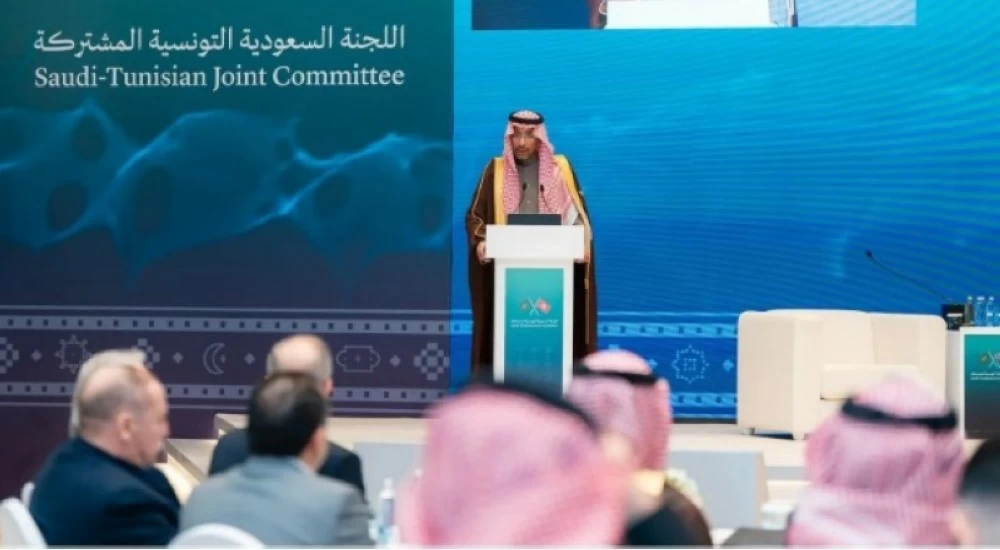
The Saudi-Tunisian Business Forum, recently held alongside the twelfth session of the Saudi-Tunisian Joint Committee, has emerged as a pivotal moment in strengthening economic ties between the two nations. Minister of Industry and Mineral Resources, Bandar Al-Kharif, underscored the forum’s importance in fostering شراكة استثمارية سعودية تونسية (Saudi-Tunisian investment partnership) and translating promising opportunities into tangible projects. This event signals a renewed commitment to collaboration, aiming for a future of mutual growth and prosperity. The forum wasn’t just a meeting; it was a strategic platform designed to unlock potential across key sectors.
تعزيز الشراكات الاستثمارية: رؤية مستقبلية (Enhancing Investment Partnerships: A Future Vision)
The core message resonating throughout the forum was the shared belief in the power of the private sector to drive economic expansion. Al-Kharif emphasized that governments play a crucial role in enabling this growth through streamlined regulations and facilitation of procedures. However, the real engine of progress lies with investors, business leaders, and innovators. He specifically highlighted sectors ripe for collaboration, including advanced industries, tourism, renewable energy, and mineral wealth. This focus on diversification reflects both countries’ ambitions to move beyond traditional economic models.
The Minister articulated a clear vision: “We bet on investors, businessmen, and private sector leaders in both countries to lead the growth engine…towards comprehensive economic integration by leveraging the competitive advantages of both countries.” This statement underscores a shift towards a more proactive and partnership-driven approach to economic development. The goal is not simply increased trade, but a deep, integrated economic relationship.
الاستثمارات السعودية في تونس: نمو واعد (Saudi Investments in Tunisia: Promising Growth)
The Tunisian side echoed this sentiment, with Minister of Economy and Planning, Dr. Samir Abdel Hafiz, acknowledging the significant growth in الاستثمار الأجنبي المباشر (Foreign Direct Investment – FDI) from Saudi Arabia in recent years. He revealed that the Kingdom now ranks among the top ten investing countries in Tunisia, with investments exceeding $375 million by the end of 2024. This demonstrates a growing confidence in the Tunisian economy and its potential for returns.
Dr. Abdel Hafiz highlighted Tunisia’s competitive advantages as an investment destination. These include a highly skilled workforce in engineering and technology, and a capacity to handle large-scale projects. He specifically pointed to opportunities in renewable energy, the manufacturing of automotive and aircraft components, pharmaceuticals, and the food industry. These sectors align with both countries’ strategic priorities and offer significant potential for value creation. Furthermore, Tunisia’s strategic location provides access to European and African markets, making it an attractive hub for التصدير (export) oriented businesses.
مزايا الاستثمار في القطاعات التونسية (Advantages of Investing in Tunisian Sectors)
Tunisia’s commitment to fostering a favorable investment climate is evident in its ongoing efforts to improve infrastructure and streamline bureaucratic processes. The availability of skilled labor at competitive costs is a major draw for investors. Moreover, the Tunisian government is actively promoting public-private partnerships to accelerate infrastructure development and attract foreign capital. The focus on renewable energy, in particular, aligns with global sustainability trends and offers long-term investment opportunities.
دور القطاع الخاص في التكامل الاقتصادي (The Role of the Private Sector in Economic Integration)
The importance of the private sector was a recurring theme throughout the forum. Dr. Omar Al-Ajjaji, Chairman of the Saudi-Tunisian Business Council, emphasized its critical role in driving economic cooperation. He stated that the forum serves as a vital platform for businesses in both countries to identify and explore promising opportunities, and to forge stronger connections.
The forum’s success hinges on its ability to facilitate concrete collaborations and remove obstacles to trade and investment. This includes addressing issues related to customs procedures, regulatory frameworks, and access to finance. The goal is to create a level playing field for businesses and to encourage cross-border partnerships.
Dr. Samir Majoul, President of the Tunisian Confederation of Industry, Trade, and Handicrafts, stressed the need for a supportive regulatory environment and the development of sustainable strategic partnerships. He believes that these are essential for increasing trade and investment flows between Saudi Arabia and Tunisia. This requires ongoing dialogue between governments and the private sector to identify and address challenges. The focus should be on creating a predictable and transparent business environment that attracts long-term investment.
خاتمة: نحو آفاق أوسع للتعاون (Conclusion: Towards Broader Horizons of Cooperation)
The Saudi-Tunisian Business Forum represents a significant step forward in strengthening the العلاقات الاقتصادية (economic relations) between the two countries. The commitment from both governments to facilitate investment and the emphasis on the crucial role of the private sector signal a promising future for شراكة استثمارية سعودية تونسية. With a clear focus on key sectors like renewable energy, advanced manufacturing, and tourism, and a shared vision for economic integration, the forum has laid the groundwork for a new era of collaboration.
The next phase will be crucial – translating the discussions and commitments made at the forum into concrete projects and measurable results. Continued dialogue, streamlined regulations, and a proactive approach to identifying and addressing challenges will be essential to unlock the full potential of this important partnership. The success of this collaboration will not only benefit Saudi Arabia and Tunisia but will also contribute to broader economic stability and growth in the region.