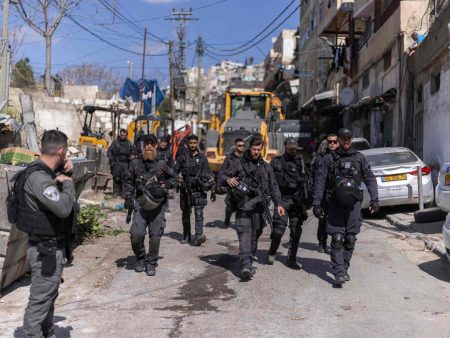







The ongoing clashes in the Sheikh Maqsoud and Ashrafieh neighborhoods of Aleppo have entered what military and strategic expert Brigadier General Elias Hanna describes as a “phase of military routine.” Despite the Syrian army’s military superiority, a significant challenge exists: time is not on their side. This article delves into the complexities of the Aleppo clashes, analyzing the strategic objectives, military tactics, and the humanitarian considerations shaping the conflict.
The Shifting Dynamics of the Aleppo Clashes
Brigadier General Hanna highlighted that the high population density within the two neighborhoods prevents the Syrian army from utilizing its full firepower, limiting its ability to achieve a swift resolution. This necessitates a slower, more cautious approach to combat. The situation has evolved from initial skirmishes to a sustained, methodical operation, reflecting a change in the army’s strategy.
The Syrian army has identified eight primary military objectives within the area, including the Martyrs’ Garden in the northeast and the Castello Hill. This plan aims to tighten the noose around the Syrian Democratic Forces (SDF), which Hanna asserts are completely isolated from their bases east of the Euphrates and lack effective logistical support within this pocket.
A Geographically Isolated Battlefield
During a military analysis segment on Al Jazeera, Hanna explained that the targeted area constitutes an isolated pocket. Declaring it a military zone signifies a transition from the initial engagement phase to this “military routine” phase, a stage demanding more time and carrying clear on-the-ground implications.
The selection of targets is directly linked to the SDF’s concentration of forces primarily in the north, while civilian density is higher in the south, particularly in the Al-Seryan neighborhood. This distribution compels the army to meticulously plan its operations to minimize civilian casualties. The military operation in Aleppo is therefore a delicate balancing act between strategic gains and humanitarian concerns.
The Strategic Importance of Castello Hill
Castello Hill, rising between 25 and 40 meters above Aleppo, overlooks the entire region. Control of this hill provides a significant tactical and observational advantage. Even the name “Ashrafieh” (meaning oversight) reflects the neighborhood’s inherent ability to monitor surrounding areas. Securing Castello Hill is crucial for maintaining situational awareness and controlling the battlefield.
Slow Progress and the Challenge of Urban Warfare
The battle has now entered a phase of slow progress towards the edges of residential areas. The SDF is attempting to obstruct the advance using machine guns and mortars. A rapid entry into the neighborhoods is exceedingly difficult due to the dense population. Hanna suggests that the initial objective is to exert military pressure that could lead to political gains. This suggests a strategy of incremental pressure rather than a full-scale assault.
Regarding military capabilities, the Syrian army possesses tanks, heavy machine guns, and anti-aircraft weapons used for fire support. The SDF, conversely, relies on snipers, machine guns, and short-range mortars. While both sides utilize drones, their impact is not decisive. Ultimately, controlling the ground within the neighborhoods remains the determining factor. The Syrian army’s strategy is focused on minimizing direct confrontation in densely populated areas.
Prioritizing Civilian Protection and Strategic Maneuvering
A primary challenge for the Syrian army is protecting civilians, leading them to avoid indiscriminate shelling. Consequently, they have designated specific military targets, declared them military zones, and begun evacuating civilians. They are urging residents to stay away from targeted locations.
The area between Castello Hill and the outskirts of residential neighborhoods provides the army with a maneuvering space, explaining the targeting of Martyrs’ Garden, where the presence of SDF military deployments and storage facilities is suspected. Control from the north enhances the ability to control the depth of the neighborhoods.
Hanna emphasized that the government and army prefer to apply military pressure without engaging in direct street battles, as urban warfare is time-consuming and resource-intensive. The army aims to establish control over all Syrian territory, and a protracted urban conflict hinders this goal. The conflict in Sheikh Maqsoud is therefore being approached with a calculated and cautious strategy.
Historical Context and Future Prospects
The SDF’s presence in Sheikh Maqsoud and Ashrafieh stems from their previous attempts to connect with Afrin and eastern Euphrates as part of a Kurdish entity project. These neighborhoods are among the poorer areas that have experienced internal migration, housing approximately 100,000 Kurds.
The recent renewal of clashes between the SDF and the Syrian army followed talks held last Sunday to implement an agreement signed in March, which aimed to integrate the SDF into state institutions. However, these talks failed to yield practical results for implementing the agreement. This breakdown in negotiations has contributed to the escalation of violence and the continuation of the Aleppo military situation.
In conclusion, the situation in Sheikh Maqsoud and Ashrafieh is a complex interplay of military strategy, geographical constraints, and humanitarian considerations. The Syrian army’s approach, characterized by a “military routine” and a focus on minimizing civilian casualties, suggests a long-term strategy of incremental pressure. The future of the conflict hinges on the ability of both sides to find a political solution or navigate the challenges of protracted urban warfare. Further developments will undoubtedly shape the broader landscape of the Syrian conflict.